Author: matt

  • No Deposit, No Return

    No Deposit, No Return

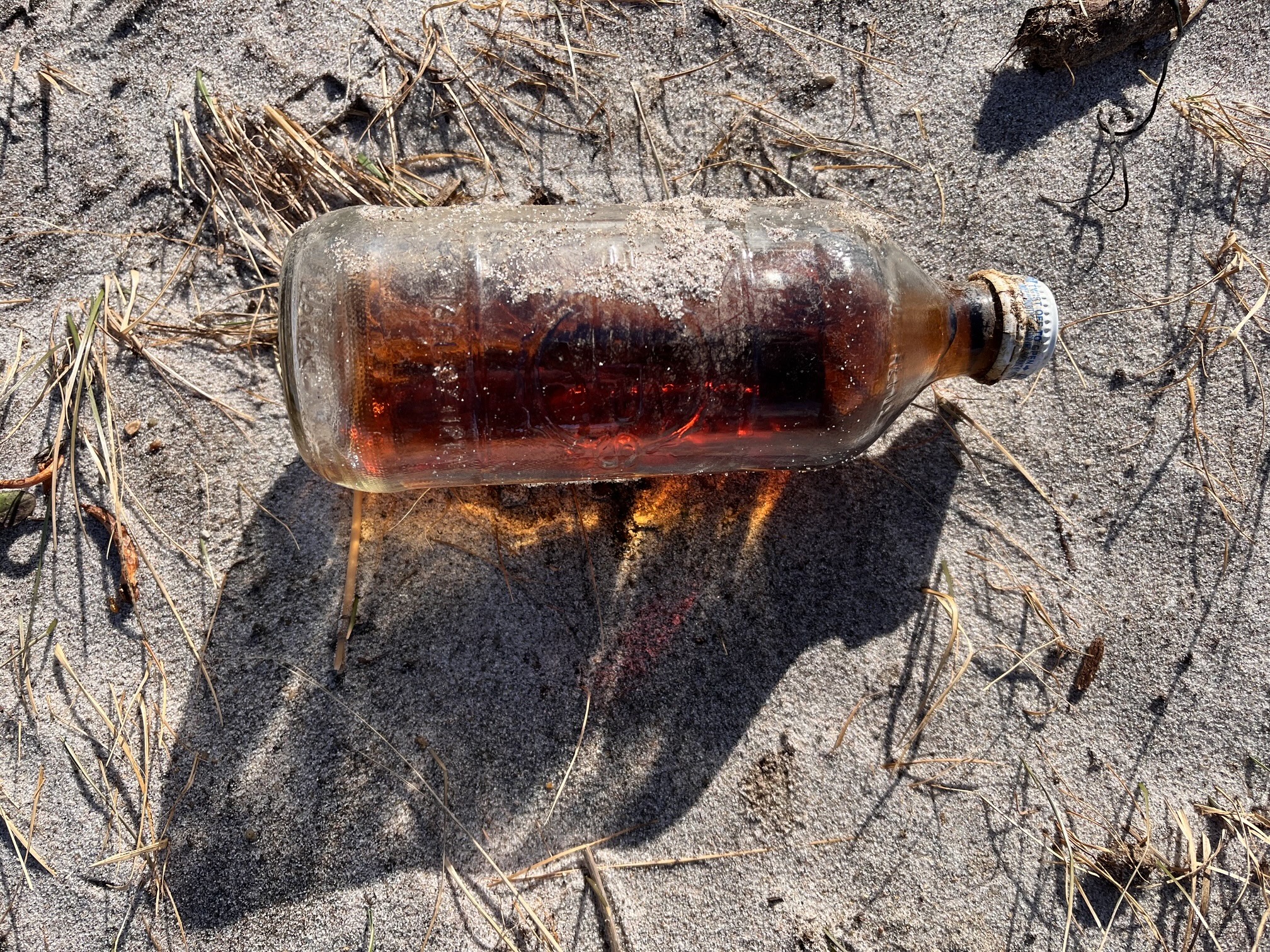
    An old Pepsi bottle appears on a storm-wracked beach. Where (and when) did it come from? And what can it tell us about the future of the coastline in an era of climate change and rising sea levels?

    Links

    Will Kochtitzky’s study of beach erosion caused by the January 2024 storms

    Audio Flux

    Transcript

    [BRINY THEME MUSIC]

    This is the Briny. I’m Matt Frassica.

    If you listen all the way through the credits–which I’m sure you do!–you know this show is part of Hub & Spoke, a collective of independent podcast producers.

    Well, Hub & Spoke recently added a new member show: Audio Flux, which is a home for short-form audio experimentation. Every few months, they put out a call for entries with a set of prompts, like “make a pet your protagonist” or “include the sound of time passing.”

    For their most recent set of prompts, they asked for 3-minute stories about climate change, inspired by a found object.

    That made me think back to something I found on the beach a couple of years ago.

    And I did make a 3-minute “fluxwork” and send it in. But doing that just made me more curious about that thing I found.

    So I decided to do some digging. The result is the episode you’re about to hear: it’s very simple, and it’s in two parts.

    Part one [chime]. The object.

    One of my favorite places in Maine is Crescent Beach state park, in Cape Elizabeth.

    It’s a beautiful spot, with woods and a meadow and a long, sandy beach that looks out to an uninhabited island. A perfect place to come in the summer to swim, or year-round for a walk.

    My wife and I have been going to Crescent beach for the past 10 years, ever since we moved to Maine.

    But on one visit, two Januaries ago, this beach looked very different.

    Two big storms had just come through, and they left behind a huge mess.

    GIANT piles of seaweed. Big chunks of wood, tires, pieces of boats.

    I took one souvenir from that visit, and it’s been sitting in the cabinet over the fridge ever since.

    It’s an old, glass Pepsi bottle, with the cap still on. There’s still ancient Pepsi inside.

    I wanted to find out what I could about this bottle. So I called Jerry Avery. He’s on the board of the Pepsi Collectors Club. And he talked to me from his house in New Bern, North Carolina—the birthplace of Pepsi. I asked Jerry how old he thought my bottle was.

    Jerry Avery: Anytime we date anything, we, we do, we use a couple of things. The type of packaging, the actual trademark logo that’s being used at the time, and then other little minor nuances that, that come from, uh, just understanding the brand and how they may change.

    Turns out, in the case of my Pepsi bottle, those minor nuances were key. That’s because, printed in the glass on the side of the bottle are the words “no return, no deposit.”

    Jerry Avery:  So essentially, when you bought that bottle, you could not turn that bottle in and get any money for it.

    No recycling. When you were done with this bottle, you threw it away.

    What I didn’t know is that bottle recycling is really old—and so is the idea of a deposit.

    Glass bottles cost money to make. So all the way back in the 19th century, bottlers charged a deposit to encourage people to bring them back when they were done with them.

    That started to change after World War II, when Americans became obsessed with throwing stuff away. Because, “convenience.”

    And in the 60s, Pepsi started offering these throwaway glass bottles. But not for long.

    Jerry Avery: What they found out was that glass was expensive, so that was very short lived.

    But that’s useful for dating purposes. According to Jerry, my bottle is from the mid- to late-60s.

    It’s also, incidentally, not worth any more money because there’s 70-year-old Pepsi swilling around inside of it.

     Jerry Avery: We always tell people, it’s great that it’s got the original liquid in it, but if you’re not willing to drink it, I’m not willing to drink it either.

    [MUSIC POST]

    Part two [chime]. Climate change.

    Now, when I found this bottle on the beach, it was sticking up out of the sand. And it had a neighbor—another Pepsi bottle just like it, sitting upright in the sand. Like a couple of friends had just left them there for a minute while they went for a swim.

    That made me think those bottles could have been buried there, side by side, since the 60s. What if the storm had just eroded the beach enough to reveal them?

    Will Kochtitzky studies coastal erosion at the University of New England. When I met him at Crescent Beach, he said the dunes there took a beating.

    Will Kochtitzky:  It got crushed. This beach got totally crushed in the January 2024 storms. 

    Beaches like this one were especially hard hit because of the direction the storms came from. Most winter storms in New England are Nor’Easters, meaning their high winds and waves hit the shore from the northeast.

    Will Kochtitzky:  that means many of the shorelines in even New England are really hardened from the northeast to take these traditional storms.

    But the January 2024 storms came from the southeast. So they hit the unprotected sides of the coast—and they wreaked havoc on homes, docks, fish shacks, restaurants… and beaches.

    Will Kochtitzky: And you can see it in the dunes, the There’s just very little dune left actually in some of these places. And we saw the northeast facing dunes actually did much better than the dunes that were facing southeast.

    Will uses drones to precisely map the contours of beaches. It’s a research project he started in December 2023… just a month before the storms hit.

    His research showed that the storms washed away huge stretches of beach and sand dunes in Southern Maine.

    Will Kochtitzky: So we could see that the beaches retreated in some cases 30 or 40 feet from where they used to be. I think it really woke a lot of people up.

    Woke people up to the fact that climate change is only going to produce larger and more frequent storms like this in the future. Causing more and more damage.

    Some towns and landowners responded by hardening the shoreline: bigger seawalls, trucking in sand, raising docks.

    Others have taken a more passive approach, by replanting dune grasses and trying to rebuild the beaches naturally.

    Will Kochtitzky:  So people have taken both approaches. Um, I think we have a lot to learn about, you know, uh, h- how effective they are, what are the best practices, um, but I think it all points to the fact that we have altered our planet so much. We have, we’re causing sea level rise so rapidly. The natural systems can’t keep up with it. So we kind of need to continue to interfere with them to help them be able to maintain some semblance of normalcy or even exist.

    Still, Will says, some amount of sea level rise is inevitable. That means, eventually, we will have to retreat from the ocean.

    Will Kochtitzky:  It’s really about buying ourselves time to allow our communities to adapt, to change what our economies look like, but also to enjoy the beach while it’s here. And even as the, this beach retreats, um, people will still come to enjoy it.

    [beat]

    For me, this old Pepsi bottle serves as a reminder that nothing is permanent.

    Yes, it’s technically litter. But littering seems like a pretty insignificant misdemeanor next to climate change.

    I only found it because of those storms, storms that signal bigger disruption to come. The ocean will continue to eat away at the shore.

    What will that ultimately reveal about us? Will we build bigger and bigger walls to keep the ocean out? Or will we manage to retreat, with all the tradeoffs that will entail?

    [credits music]

    The Briny is written and produced by me, Matt Frassica.

    The show has an email newsletter now—with weird and beautiful discoveries from marine biology, ocean-related news, and podcast extras. In the latest edition, you’ll find a bonus interview with Brian Marcaurelle of the Maine Island Trail Association about the sheer amount of stuff that washes up on the uninhabited islands of the Maine coast.

    You can read and subscribe to the newsletter at the briny dot net.

    And please, drop a line, say hello, tell me about a story you’d like to hear on The Briny. My email is matt at the briny dot net.

    The Briny is a proud member of Hub & Spoke audio collective, a network of independent shows. As I mentioned at the top, this episode was inspired by Hub & Spoke member Audio Flux. You can check out their latest episode, with illustrator Wendy MacNaughton, at Audio Flux dot org.

    Listen in your preferred podcast app:
  • Rebuilding the Ladder

    Rebuilding the Ladder

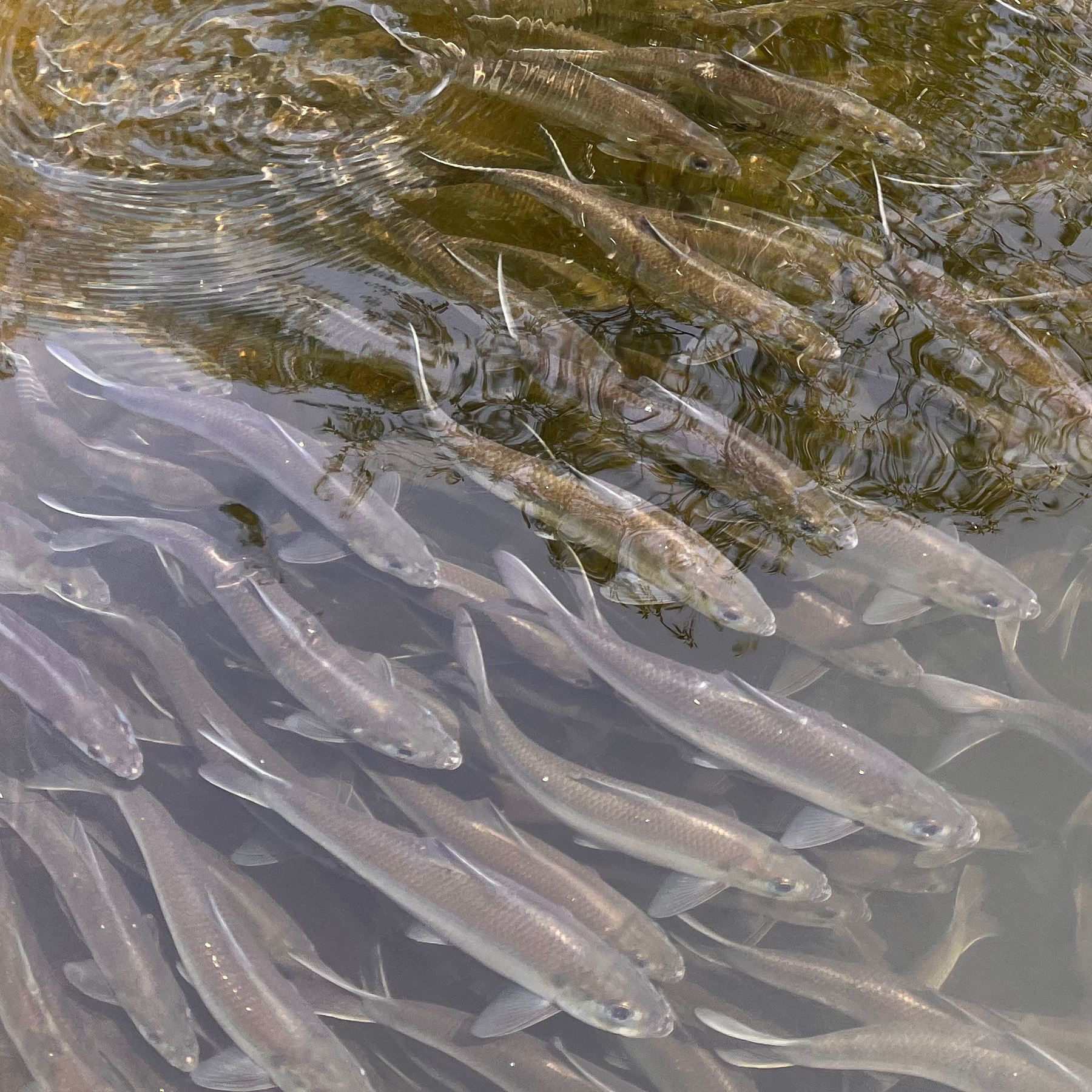
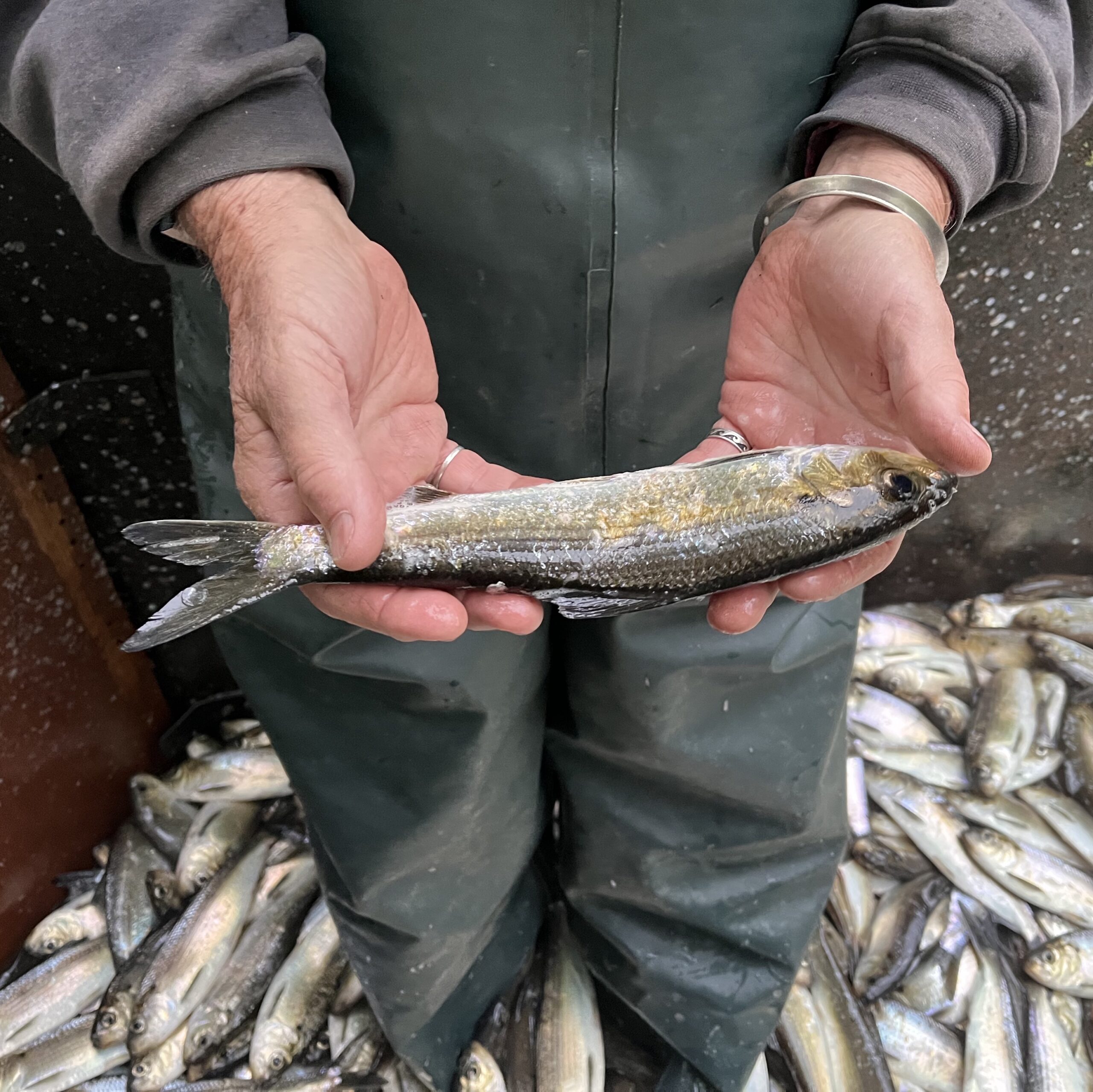
    Alewife, a species of river herring native to Eastern North America, has been harvested at Maine’s Damariscotta Mills fish ladder since the early 1800s. Two hundred years later, the ladder was falling apart and the numbers of fish making their way upstream to spawn had dwindled. So a group of local residents started raising money to rebuild it. They decided to start a festival devoted to this little fish with a funny name. But would anyone come?

    Links

    Damariscotta Mills Fish Ladder Restoration

  • The Real Alewives of Kennebec County

    The Real Alewives of Kennebec County

    Alewife, a fish with a funny name, lives in the ocean and swims upstream to spawn in lakes along the east coast of North America. Historically, their vast populations fed everything from eagles to whales. But human-made obstructions like dams have blocked some of their largest migration routes for centuries. This is the story of how a group of determined citizens cleared one stream in Maine—and waited for the alewife to return.

    Links

    Maine Rivers

    Music Credits

    Our Only Lark by Blue Dot Sessions

    Links

    Maine Rivers

    Music Credits

    “Our Only Lark” by Blue Dot Sessions

    Transcript

    Narrator: One day last spring, I drove a couple hours north from where I live to the small town of Vassalboro, Maine. 

    I had just pulled into a parking lot when a big guy in a big green pickup pulled up next to me.

    Nate Gray: Got your keys? 

    Matt Frassica: Got them. 

    Gray: Get in the truck.

    [Theme music: Rhythmic synth arps and waves crashing]

    I’m Matt Frassica. And this is the Briny, a podcast about how we’re changing the sea, and how the sea changes us. 

    Vassalboro is a long way from the ocean – it’s about 40 miles inland. But I went there to find out about a kind of fish that lives in the ocean and travels upstream to reproduce. 

    Recently, those fish came back to their spawning grounds here … for the first time—in centuries. And THIS guy had a lot to do with it.

    Gray: Matt, good morning. My name is Nate. 

    Frassica: Nice to meet you.  

    Gray: Let’s do this thing. 

    Frassica: All right. 

    Gray: All right. Like any good story, we’re gonna start at the beginning and end up at the beginning.

    Nate works for the state’s Department of Marine Resources. He drove me down the road a few minutes to a small pond surrounded by a park. There were kayaks on the bank and a picnic table—but we were there to look intothe water. 

    Gray: See the fish?

    In the still water of the pond, you could see dozens of small fish undulating slowly, swimming in place. THESE were the fish I came to see. They’re called alewives.

    Gray:  Alewives are a member of the herring family. Okay? These happen to be anadromous alewives. 

    Frassica: And anadromous means they live sometimes in the ocean? 

    Gray: Okay, yeah, anadromous. Okay, so we’re gonna, we’re just gonna cover some basic definitions here. Anadromy covers that strategy, like the Atlantic salmon, live in the ocean, spawn in the freshwater. So the vast bulk of their lives, these alewives, will be spent in the ocean. They come in the freshwater to spawn. It’s a great strategy to get out of the ocean when there’s a lot of hungry mouths. And come into the fresh water and spawn where there’s fewer hungry mouths and smaller hungry mouths. Okay? Everything eats these things. From whales, bald eagles, raccoons, minks, otters, cormorants, seals, everything pounds on these things when they can get to them. And right now, it’s a smorgasbord, 

    Alewives live along the eastern coast of North America, from Newfoundland to North Carolina. And these particular fish have come a LONG way from the ocean to get here… up a major river called the Kennebec.

    [Music: Pulsing synths]

    Gray: we’re about 75 miles from the mouth of the Kennebec as the fish swims. So, they’ll start pre staging in the mouth of the river, oh, as early as March. Okay, going in and out with the tidal flow. In and out. In and out. The water starts to warm up. In a little bit further.

    [Sound design: Bouncing notes rising]

    In a little bit further. Water warms up in a little bit further. They’ll start fully committing to the river system in early April, in a little bit further with the tide. Okay, water starts warming up. You get a few nice warm days. Ooh, this is nice. It gets a little bit warmer. They go further up. Flows start coming down.

    [Sound design: Bouncing notes rising chaotically]

    You get to that right temperature and boom, they start stringing and headed upstream.

    [Music and sound design end]

    That’s a couple months of swimming, 75 miles, upstream, with no food. 

    Gray: Nobody’s interested in food. They want to get here, make kids, and get out. 

    After this adventure, the alewives will swim back downstream… and do the whole thing again next spring.

    The eggs they leave behind will hatch in a matter of weeks, and the juveniles will stick around in the lake, eating plankton and growing big and strong. Then in the fall, the young alewives travel downriver to the ocean. 

    After four years of living in the ocean, they’ll be mature adults, and they’ll come back here… to do what mature adults do… and start the whole cycle over again.

    BUT like a lot of fish species, alewife populations have been in decline – for centuries. To show me the reason, Nate brought me to another spot   . We pulled off on a gravel road next to an old brick building that overlooked a rushing stream.

    This building used to be a woodworking mill, going back 200 years. 

    Gray: They made everything here from sleighs, chairs, hammer handles, ax handles. If it was made out of wood, they could build it.

    The water behind the dam powered the mill … using the energy of that pent up stream to run the machinery. It’s the same story in small towns all over New England.

    Gray: if you look at any town in Maine, they all have one thing in common. That. Water. They’re all on water, every last one of them. Because it was That is one of the reasons that we saw the massive decline in this particular species, river herring. It’s because… of all these dams. 

    A couple hundred years later, most of those dams aren’t powering machinery anymore. 

    Gray: The vast, vast bulk of dams in this state do one thing. They sit there. 

    The other thing those dams do is block the migration of river herring. So the first step in restoring the fish habitat is to take out the dams… or build a fish ladder so they can swim around them.

    Of course, taking out dams or building fish ladders requires working with another species: humans.

    [Music: “Our Only Lark” by Blue Dot Sessions]

    Landis Hudson: We spent a fair amount of time listening to people and trying to understand the personalities. 

    Landis Hudson is the executive director of Maine Rivers, a nonprofit focused on habitat restoration in the state. She and Nate started working together in Vassalboro about 15 years ago.

    Hudson: We had lots of meetings. We just had lots of meetings and we would invite the local conservation commission, the land trust, the two towns, trying to figure out how to tell the story that we wanted to tell. And we wanted to make sure that we had as many local voices as we could bring in.

    There were six old dams on this one, small stream … and each one required negotiations with different landowners. So Landis and Nate had to be willing to compromise.

    Hudson: We couldn’t really be perfectionists and say we’ll only do this if we can do it our way. We had to take each situation and say what’s truly the best we can do here? What is the most realistic thing we can do here? If, if we had dreamed up on our own how we wanted to do it, it probably never would have gotten done. 

    [Music ends]

    One of those landowners was Ray Breton. 

    Ray Breton: I, I feel like I’m the luckiest guy. I have the prettiest property in this town

    Breton owns a giant, red-brick mill complex. At one time, the mill was the town’s major employer, making woolen textiles using the energy from two dams on the river.

    Breton also owns the park where Nate and I watched the alewives swimming earlier. That pond sits behind the dams on Breton’s property. He wasn’t opposed to restoring alewife habitat, but he didn’t want to lose his dams—and with them, the pond.

    Breton: And everybody’s like, how come Ray gets to keep his dams and all the other ones got taken down? I says, you’d get a whole town upset. This is the only place they have to go. You know, we have four lakes in this town. You can’t swim in none of them. You can’t do anything. 

    Frassica: Because they’re surrounded by private land. 

    Breton: Yeah. The town doesn’t have anything. All they got is what I give them, and I share what I got.

    So Maine Rivers and the state worked with Breton to come up with fish passages to bypass the dams. 

    But bringing alewives back here wouldn’t have been possible 25 years ago. That’s because there were a couple of big industrial dams downstream from here that blocked fish from getting this far  upriver. 

    [Archival music: Piano and synth intro]

    The first of those dams came down in 1999.

    [ARCHIVAL NEWS CLIP]

    Reporter in clip: Maine makes some environmental history today. With the help of a backhoe, the Kennebec River is freed from the Edwards hydroelectric dam in Augusta. The river flows free; the dam soon will be no more.

    Hudson: It was a lot of headaches, a lot of frustration, a lot of work, but it essentially opened up the watershed and made it possible. For the fish to move upstream to try to make their way to their historic spawning grounds.

    Removing that dam allowed the fish to get upstream… but it also showed people that the ecosystem could bounce back.

    [Music: Pulsing synths]

    Hudson: within hours of this dam being removed, the fish were making their way up the river. So it was a combination of the physical work, but also opening people’s imaginations and saying, Oh, just because the dam has been here, For, oh, a lot longer than 100 years doesn’t mean that it belongs here forever, and it doesn’t mean that a river that’s essentially been obliterated cannot come back to life.

    The good news is, once you get the dams out or give the fish a way to get around the dams, they pretty much take it from there. Here’s Nate Gray again.

    Gray: River herring restoration, outside of the human scope of things is relatively simple. Put some fish in, wait four years, fish come back. Okay? When you add the human element and the politics of it, you know, nobody likes change. I want to keep  my dam, you know, where the struggle comes in. These are relatively easy fish to restore,  

    Frassica: Once they have a way, they’ll go.

    Gray: Yes, they’ll go. Yep.

    After the alewives make their way upstream, they get to one final fish ladder. 

    Gray: So like all good stories, we’re going to finish where we began.

    On the other side of this ladder is their goal: China Lake, where they’ll spawn.

    Frassica: There’s a gigantic Pelican case at the top of the fishway.

    At the top of the ladder is a big box with a machine— 

    Gray: And there’s the counter. 

    —that counts the fish coming into the lake.

    Gray: This is a passive field counter, so it has two electric fields; each tube, 12 tubes, three stainless steel bands, the middle band is the field band… 

    [Music: Upbeat electric piano]

    2022 was the first year that fish could swim all the way up to China Lake after 200 years. And in that first spring, more than 800,000 fish made the trip.

    Which… is a lot.

    But in 2023, the second year China Lake was open for spawning, Nate and Landis counted almost 2 million fish.

    Alewives are an unusually resilient species. There’s no guarantee that complex ecological systems can just bounce back from centuries of human interference. And outside of Maine, alewives haven’t rebounded like this—even elsewhere in New England, in this tiny sliver of their range. 

    Still, watching the ecosystem right itself… it’s an unusually hopeful story. We’re used to hearing about decline, about habitat loss and species headed for extinction. But all the alewives need is for us to get out of their way.

    [Music fades out]

    Gray: This simple, simple, infinitely complex, active nature is so reliable. It’s so comforting to know that it still works just the way it was intended, okay? I like seeing the fed loons, I like seeing the fed eagles, I like seeing the alewives getting chased, I like seeing that. There’s a beauty there that is beyond sublime, it really is, you know? Um, how do you… Sell that. Right. That idea to people?

    Frassica: Well, you must have done it.

    Gray: Well, you must do it. To undersell it, and just simply put it in a fish way, you failed. Because you’d be right back, fish would be plugged up by beaver boards, and gunk, and nobody would be paying attention. 

    [Sound design: Bouncy notes rising]

    The most important piece of habitat restoration isn’t the physical removal of dams, or building fish ladders… it’s convincing people that the habitat is worth fixing, that the fish… and the entire food web they support… can come back… if we give them the chance.

    [Sound design ends]

    The Briny is an independent podcast with original music and sound design by me, and additional music by Blue Dot Sessions.

    The Briny is a proud member of Hub & Spoke, a collective of independent producers making great podcasts out of a love of the medium.

    If you’re a fan of The Briny, check out Out There, a podcast that explores big questions through intimate stories outdoors. They recently launched their new season, and it’s all about the theme: Silence.

    You can find out more and hear all the Hub & Spoke podcasts at hubspokeaudio.org.

    [Hub & Spoke sonic ID: Penny farthing gears spinning and bell chiming]

  • Animal Spirits

    Animal Spirits

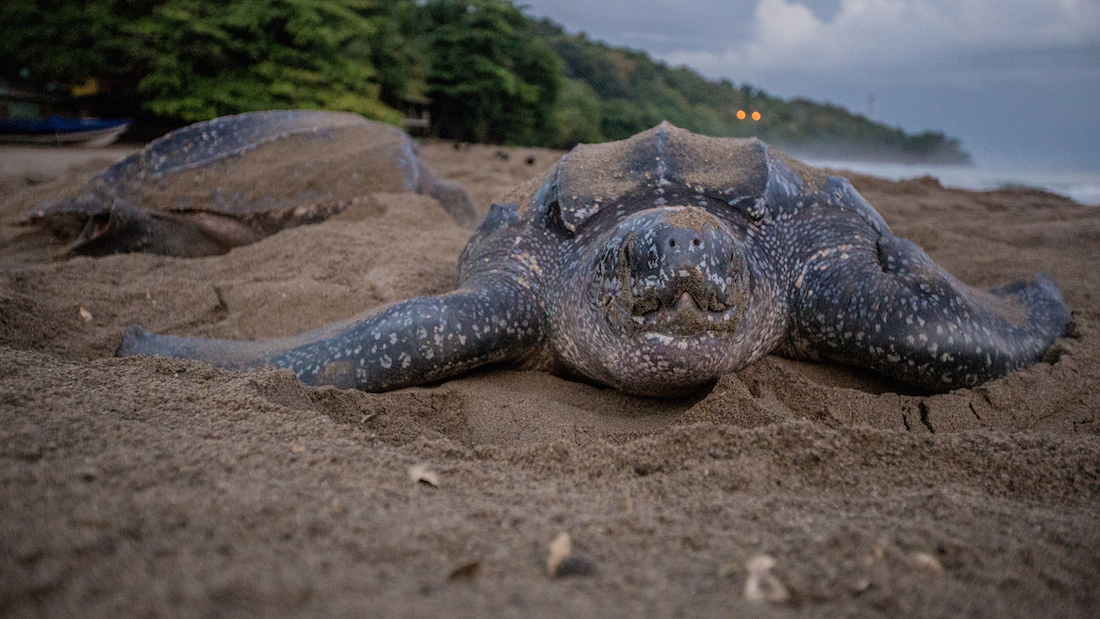
    On the tiny Caribbean island of Dominica, a remote beach serves as an ideal place for sea turtles to lay their eggs. The Dominica Sea Turtle Conservation Organization (DomSeTCO) keeps watch over the turtles when they come ashore and protects them from poachers. But after the devastation of Hurricane Maria, DomSeTCO’s organizers knew they needed more than shoestring grants to stay solvent — they needed a business plan. Marine biologist Jake Levenson had an idea that drew on the island’s agricultural strengths: why not try making rum?

    Links

    Dominica Sea Turtle Conservation Organization

    GoFundMe for the Rosalie Conservation Center

    Photo

    https://commons.wikimedia.org/wiki/File:Leatherback_turtle_nesting_on_a_beach_in_Grande_Riviere.jpg

  • Fear Is the Thing with Fins

    Fear Is the Thing with Fins

    After a shark scare when she was a teenager, Pat Gallant-Charette never liked wading past her waist. So when she decided in her 40s to compete in a 2.4-mile ocean swim, she had to suppress her fears. Now an internationally decorated marathon swimmer, Pat still wrestles with anxiety on every swim. And she has seen sharks. But she tells herself: “stay focused, and swim.”

    Links

    Pat’s website and videos of her swims

    Pat’s records